


Retailers are starting to realise that GenAI, short for Generative Artificial Intelligence, has the ability to improve consumer experiences, increase efficiency, and even lower costs as it transitions from hype to reality. Making a distinctive and eye-catching product presentation is a skill that can greatly boost sales. Generative AI serves as a facilitator in this endeavour, offering innovative approaches to enhance product presentations, especially for less noticeable items. The focus of today’s visionary leaders is on turning its vast potential into measurable business value. Rather than falling victim to the shiny-object mentality or spreading themselves too thin across too many initiatives, decision-makers should adopt a deliberate approach to implementing GenAI. There is a significant demand on many to demonstrate that they are using this powerful technology centrally rather than peripherally. However, as GenAI is still in its infancy, many executives do not know which applications could be most beneficial to their organisation or how to apply them.

What is Generative AI?

Generative AI aims to use deep learning techniques and sophisticated algorithms to generate new content from training data. Simply put, GenAI is a subset of AI systems that produce outputs such as text, images, music, and so on. Large Language Models (LLMs) have seen significant improvements recently, largely due to access to copious amounts of data. This development is a key driver behind the growth of GenAI. These LLMs are becoming better at powering generative AI models and producing useful outputs for their users. Although GenAI and LLMs have been around for some time, their latest advancements are now readily measurable.

How does Generative AI improve customer experience?

The rise of new GenAI tools has helped bring the recent improvements to a wide audience, who continuously find new ways to utilise them to assist in their jobs and day-to-day lives. They have been incredibly popular—in fact, ChatGPT reached 100 million users1 just two months after launch, a rate that had never been achieved before.

The way generative AI operates is as follows: A subject’s information, or corpus, consists of textual or other tokenised data. A token is a consumable portion of the source content, such as a single pixel or a word segment. These tokens can learn patterns through embeddings, fine-tuning, and prompting. These patterns are utilised to build foundational models, which serve as the building blocks for different kinds of inference—response-based interactions.

What is GenAI with AR & how does it work?

GenAI utilises advanced algorithms to understand consumer preferences, style trends, and even individual body shapes. On the other hand, Augmented Reality (AR) superimposes digital elements onto the real world, enhancing the environment and creating interactive experiences. When these two technologies join forces in the realm of fashion, magic unfolds.

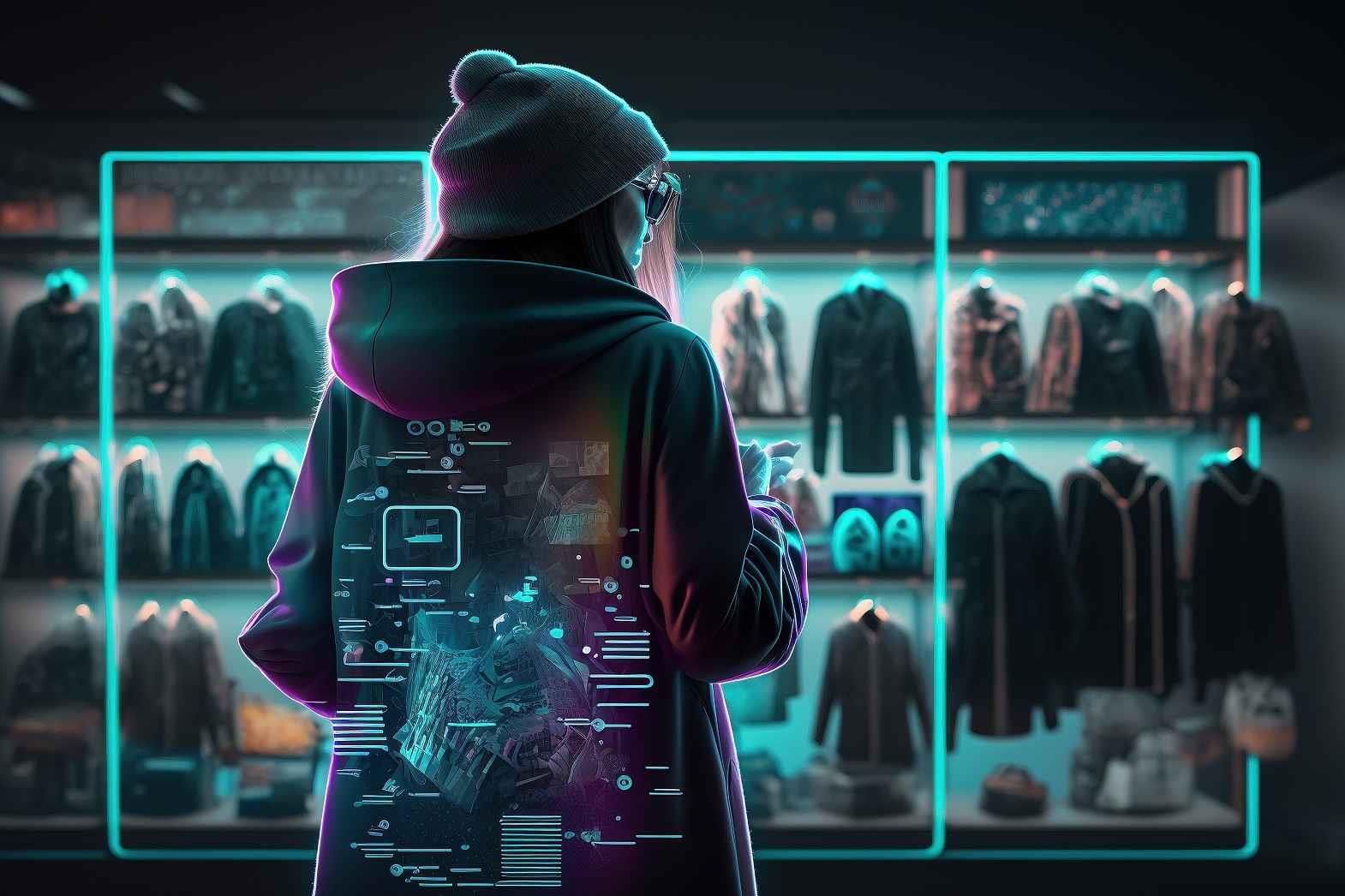
Imagine this: you are sitting comfortably at home, browsing through an online fashion store. Instead of just scrolling through static images, you activate the GenAI with AR feature. Suddenly, your smartphone’s camera becomes a virtual dressing room, allowing you to try on different outfits virtually.

Using GenAI, the system analyses your body type, skin tone, and style preferences to suggest clothing items tailored just for you. Then, with AR, you can see how these items fit and look on your own body, as if you were trying them on in a physical store. You can walk around, turn, and view every angle, ensuring that the garment fits and flatters you perfectly.

Integration of GenAI with Fashion

The integration of GenAI with fashion has made it possible for brands to model fabrics and soft bodies in three dimensions, a capability that emerged in the late 2010s. This advancement enabled them to create more breathable and flexible sportswear by mapping the body’s heat and sweat production during physical activity.

Digital products today are nearly as good as physical ones in capturing the entire garment experience: not just the fabric and feel, but also the stretch, the manufacturing process, and other aspects previously thought to be exclusive to real prototypes.

As we consider the future development of fashion—focusing on reducing waste, valuing true diversity, and staying updated with real-time data—the appeal becomes evident. The fashion industry presents numerous opportunities, and generative artificial intelligence has the potential to revolutionise it completely.

Generative AI is not just a buzzword; it is a tool designed to tackle specific challenges in the fashion industry. The possibilities are virtually limitless, ranging from directing designs to simulating material effects, to accommodating unique human characteristics like body heat and sweat patterns.

Bringing Fashion to Life

The potential of GenAI with AR to bring fashion to life in ways we never would have imagined is one of its most fascinating features. Tailored graphics that cater to personal tastes are necessary for customisation, which is a fundamental aspect of the current consumer experience. The traditional manual process of creating unique product images, or pack shots, wastes time and resources.

To streamline this process, generative AI steps in and provides a set of tools that make the creation of photoshoots easier. With the aid of open-source image creation models and proprietary solutions like Adobe’s Firefly, e-commerce companies can now save costs without sacrificing the aesthetic appeal of their product displays.

Using this technology, one can experiment with different looks, mix and match various pieces of clothing, and even see how bags or jewellery might complete the outfit in real time. It is like having a virtual runway and personal stylist at one’s disposal.

Further, generative AI can be used to create visually appealing backgrounds for product photos, giving each item a unique aesthetic appeal. Static objects such as perfume bottles and logos, which do not change, allow the AI to create dynamic backgrounds with ease, producing visually pleasing product images.

Applications of Generative AI for Fashion

The fashion industry has long been a hub for creativity and invention, with designers consistently pushing the envelope and venturing into uncharted territory. According to information from Glossy’s LFW briefing2, Shanghai-based KWK by Kay Kwok worked with a sound artist for one of its runway shows. The artist used ChatGPT to create lyrics that were played over an accompanying violin.

So, despite some people dismissing AI as a marketing gimmick, designers are increasingly adopting generative AI to inform supply chain traceability, seasonal designs, and marketing music. And, as the application of AI in the industry grows, we can expect even more innovative advancements that will fundamentally alter the way people view fashion.

Some of the ways in which generative AI is being used in fashion and retail are:

Product Development: AI can assist fashion designers in developing completely new designs or improving current ones by utilising the latest trends and consumer preferences. AI is also capable of generating fresh imagery and content. With generative AI, designers can input desired constraints and criteria, such as the target market, materials, and aesthetic, into the algorithm. The AI system then goes to work, creating entirely new fashion designs based on these factors, presenting designers with countless creative options.

Establishing Your Own Brand: In the highly competitive world of fashion, having a distinctive brand identity that makes you stand out is crucial. Generative AI plays a role here; it can help produce novel, eye-catching designs that attract customers and help a company/brand carve out a niche for itself in the market. Although building a brand from scratch is a complex process, AI can simplify and make it more efficient.

The first step in building a brand is creating a design brief. This involves defining the target market, values, mission, and voice of the brand. Language models such as ChatGPT are invaluable resources for creating a comprehensive design brief. After finalising the design brief, the next step is to create the brand’s visual identity. This includes selecting typeface combinations, colour schemes, and other visual elements that match the brand image. The developer can then choose from a wide range of options that AI offers to best suit the vision for the brand. Various AI technologies, including Midjourney, Dall-E 2, and Stable Diffusion, can expedite the logo design process. AI can also be used to generate product photos for the company.

Trend Forecasting: Trend forecasting is becoming increasingly challenging for the fashion industry due to the rapid turnover of trends and the growing influence of social media on consumer behaviour. As new products, styles, and trends emerge on social media every week, brands need to plan ahead for time-to-market to stay competitive. However, collecting data from fashion designers and influencers through physical or digital observation has always been labour-intensive and time-consuming. Generative AI is capable of identifying and forecasting consumer preferences and upcoming trends in social media data that human analysts might overlook.

By combining elements of previous designs and exploring new design possibilities, generative AI can assist a brand in producing original design concepts. This gives it a competitive edge by providing a fresh and unique perspective on design. By predicting consumer demand for specific products and determining the most efficient production techniques, generative AI can also optimise fashion firms’ production processes. This can reduce waste and enhance the efficiency of the supply chain, thereby saving costs and increasing profitability.

Marketing and Consumer Experience: Fashion companies are revolutionising their marketing with generative AI, enabling product personalisation and enhancing customer engagement. This technology crafts tailored e-mails, web pages, subtitles, and ads, boosting user interaction. Generative AI’s capacity for unique and compelling content gives fashion brands an edge in the competitive market.

By refining marketing with generative AI, these firms enhance ROI and expand their reach. As e-commerce grows, the use of generative AI is becoming more common, improving product recommendations, and making online browsing more efficient. This enhances customer experiences, strengthens online presence, and increases sales. Furthermore, generative AI aids in making manufacturing processes more sustainable, helping the fashion industry reduce its environmental impact by optimising resource use and reducing waste.

Supply Chain Optimisation: AI systems enhance demand forecasting by analysing synthetic and historical data, minimising waste and ensuring optimal stock levels for effective inventory management. Additionally, AI streamlines production through scenario modelling and data analysis, identifying cost-efficient and high-quality production methods to reduce expenses and accelerate production. It also optimises shipping by determining the most efficient routes and schedules, shortening delivery times and cutting transportation costs.

Benefits of Generative AI in Fashion and Retail

Generative AI is transforming the fashion retail industry in exciting and innovative ways. From efficiency to sustainability, virtual try-on technology to customised production, this technology is making waves and helping companies stay ahead of the game.

Efficiency: Generative AI boosts efficiency in the fashion retail sector by automating tasks such as product tagging, image classification, and inventory management, freeing employees to focus on customer support and product development. It enhances supply chain efficiency by accurately predicting demand and ensuring a balanced inventory, thus avoiding overstocking or understocking. Additionally, generative AI streamlines the design process by leveraging real-time data on sales trends and stock levels to adjust inventory intelligently, reducing costs and accelerating time to market. This not only improves product discoverability but also elevates the consumer experience.

Virtual Try-On and Augmented Reality: Virtual try-on technology enables customers to see how clothes and accessories look on them in real time using their device’s camera or a photo upload, eliminating the need for physical fitting. However, this technology can sometimes feel disconnected from the actual shopping experience, as it only provides a digital representation. Augmented reality (AR) enhances this by superimposing digital content onto the physical world, creating a more immersive interaction with the product. For example, AR allows customers to virtually try on shoes and visualise walking in them, offering a closer approximation to real-life fitting.

This technology not only helps customers make more informed purchasing decisions, reducing returns from sizing and fit issues but also supports sustainability by decreasing waste. Furthermore, by offering an engaging and interactive shopping experience, retailers can increase sales and foster customer loyalty.

Customisation: Generative AI enables businesses to efficiently create personalised products, aligning with individual customer preferences and requirements at scale. By leveraging algorithms, companies can design and pattern items uniquely for each customer, including offering tailored fashion recommendations based on their style, body type, and purchase history. This approach enhances customer satisfaction and loyalty by delivering a curated shopping experience tailored to each individual.

Overall, the use of generative AI for customising products not only caters to the increasing demand for personalised items but also offers notable advantages in terms of operational efficiency and environmental sustainability.

Risks and Challenges of Using GenAI with AR

Data Privacy Concerns: Utilising GenAI with AR involves collecting and analysing vast amounts of personal data, including body measurements and style preferences, which raises concerns about privacy and data security.

Accuracy and Reliability: While GenAI algorithms strive to accurately interpret individual preferences and body types, there is always a risk of errors or inaccuracies, leading to mismatches between virtual try-ons and real-life fittings.

Dependency on Technology: The fashion industry’s reliance on GenAI with AR means that any technical glitches or malfunctions could disrupt the shopping experience, potentially leading to customer frustration and loss of sales.

Digital Discrepancies: The virtual representation of clothing items through AR may not always accurately reflect their real-life counterparts in terms of colour, texture, or fit, leading to misunderstandings and dissatisfaction among consumers.

Accessibility Issues: Not all consumers may have access to the technology required for GenAI with AR, such as smartphones with AR capabilities or stable internet connections, leading to disparities in access to personalised shopping experiences.

Ethical Considerations: There are ethical dilemmas surrounding the use of AI in fashion, including concerns about perpetuating unrealistic body standards or reinforcing existing biases in the design and recommendation algorithms.

Environmental Impact: The increased reliance on digital shopping experiences facilitated by GenAI with AR could potentially contribute to environmental issues, such as increased energy consumption from data centres or additional electronic waste from discarded devices.

Regulatory Compliance: Adhering to regulations and standards related to data protection, consumer rights, and AI ethics poses a challenge for fashion companies implementing GenAI with AR, requiring ongoing monitoring and adaptation to evolving legal landscapes.

The Future of Fashion

As GenAI with AR advances, the future of fashion holds endless possibilities. Envision attending virtual fashion shows from the comfort of one’s home, where AR brings the latest designs to life right before one’s eyes. Or imagine collaborating with virtual designers to craft custom-made clothing that perfectly fits an individual’s measurements and style preferences.

This blend of GenAI and AR is sparking a digital revolution in fashion, prioritising creativity, innovation, and personalisation. Whether one is a dedicated fashion follower or simply looking to enhance their wardrobe, embracing GenAI with AR invites them into a new era of style and elegance. The future of fashion has arrived, offering unprecedented ways for individuals to experience and interact with fashion.